
Buying a two-wheeler makes every day travel convenient, but it also comes with financial and legal responsibilities. One of the most important is having the right insurance coverage. In India, third-party insurance is mandatory for two-wheelers, but riders can also choose broader coverage through a comprehensive policy.
So, when comparing third-party vs comprehensive two-wheeler insurance, which option is better?
The answer depends on your vehicle, how you use it and the level of financial protection you want. Understanding the difference can help you choose a policy that suits your needs instead of simply selecting the cheapest option.
What Is Third-Party Two-Wheeler Insurance?
Third-party insurance is the basic motor insurance cover required by law for vehicles used on Indian public roads.
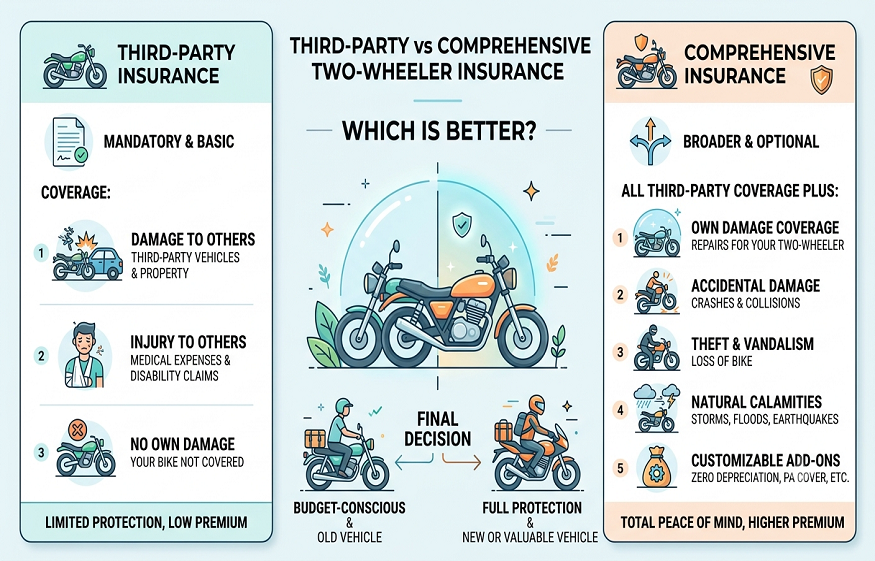
It protects you against certain financial and legal liabilities if your two-wheeler causes injury, death or property damage to another person. The policy does not generally cover damage to your own motorcycle or scooter.
For example, if you accidentally hit another vehicle and cause damage to it, your third-party policy can cover the eligible third-party liability according to the applicable terms and limits. However, repairs to your own two-wheeler may not be covered under a third-party-only policy.
This makes third-party insurance essential for legal compliance, but its protection is limited when it comes to your own vehicle.
What Is Comprehensive Two-Wheeler Insurance?
Comprehensive two-wheeler insurance provides broader protection by combining third-party liability coverage with own-damage protection, subject to the policy terms.
Depending on the policy, own-damage protection can cover losses resulting from events such as:
- Road accidents
- Theft
- Fire
- Natural calamities
- Man-made events
- Other specified risks
For riders looking for wider protection, comprehensive bike insurance can provide financial support for covered damage to their own vehicle while also addressing third-party liabilities.
However, comprehensive does not mean that every possible loss is automatically covered. Policy exclusions, deductibles, conditions and coverage limits still apply.
Third-Party vs Comprehensive: Key Differences
The biggest difference between the two policies is the scope of protection.
| Feature | Third-Party Insurance | Comprehensive Insurance |
| Third-party liability | Covered | Covered |
| Damage to your own bike | Generally not covered | Covered for specified risks |
| Theft protection | Not covered | Generally covered, subject to terms |
| Accident-related own damage | Not covered | Generally covered |
| Natural calamity-related damage | Not covered | Generally covered |
| Premium | Usually lower | Usually higher |
| Overall protection | Basic | Broader |
While third-party insurance meets the mandatory requirement, comprehensive insurance provides an additional layer of protection for your own two-wheeler.
Which Is Better for a New Bike?
If you have purchased a new or relatively expensive motorcycle, comprehensive coverage may be worth considering.
A new bike can represent a significant financial investment. If it is damaged in an accident or stolen, replacing or repairing it can result in a substantial expense.
With comprehensive bike insurance, eligible own-damage losses can be covered according to the policy terms. This can reduce the financial burden associated with unexpected incidents.
However, you should consider the bike’s value, usage and your ability to absorb unexpected repair or replacement costs before making a decision.
Is Third-Party Insurance Enough for an Older Bike?
For an older two-wheeler with a relatively low market value, some owners may choose third-party-only insurance.
This can make sense if you are comfortable paying for repairs to your own vehicle and primarily want to meet the mandatory insurance requirement.
However, the decision should not be based solely on the age of the vehicle. Consider how frequently you ride, where you ride and how financially disruptive theft or accidental damage would be.
An older bike may still be essential for daily commuting, making broader protection valuable depending on your circumstances.
What Are Add-On Covers?
One advantage of choosing comprehensive insurance is the ability to consider certain add-on covers, depending on the insurer and policy.
Examples may include:
- Zero depreciation cover
- Roadside assistance
- Engine protection
- Return to invoice cover for eligible vehicles
- Consumables cover
These add-ons can provide additional protection for specific situations, but they increase the overall premium and may have eligibility conditions and exclusions.
Instead of selecting every available add-on, choose those that are relevant to your vehicle and riding habits.
What Should You Consider Before Buying?
Don’t compare policies only on their premiums. A cheaper policy may offer less protection or have different deductibles and exclusions.
Before purchasing two-wheeler insurance, consider:
Coverage: Understand exactly what the policy protects.
IDV: Check the Insured Declared Value, particularly for own-damage and theft-related claims.
Deductibles: Know how much you may have to pay towards an eligible claim.
Exclusions: Read the situations and losses that are not covered.
Add-ons: Select optional covers based on your requirements rather than simply adding them all.
Claim process: Check how claims are reported and what documentation may be required.
So, Which Insurance Should You Choose?
There is no single answer that works for every two-wheeler owner.
Third-party insurance is suitable for meeting the mandatory insurance requirement and protecting against covered third-party liabilities. It is generally more affordable, but it does not provide protection for damage to your own bike.
Comprehensive two-wheeler insurance offers broader protection and may be more suitable if you own a new, valuable or frequently used motorcycle or scooter. Comprehensive bike insurance can help reduce the financial impact of covered accidents, theft and other specified risks.
Ultimately, the right choice depends on your vehicle’s value, riding frequency, financial situation and risk tolerance.
The Bottom Line
Third-party and comprehensive insurance serve different purposes. Third-party insurance provides the essential liability protection required by law, while comprehensive insurance extends protection to your own vehicle for covered risks.
If protecting your two-wheeler against a wider range of unexpected financial losses is important to you, comprehensive coverage may be worth considering. Before buying, compare the policy’s coverage, exclusions, deductibles, IDV and add-ons-not just the premium.
A few minutes spent understanding your insurance options can help you make a more informed decision and keep your two-wheeler protected on the road.